Analyze packages
Fetch fingerprints or analyze tarballs to see capability traces, scripts, hashes, and dependency context.
 PermJS
Dependency permissions for Node.js
Follow us
PermJS
Dependency permissions for Node.js
Follow us
Organization policy for package risk
Set the rules once, enforce them across the org
Team workflow
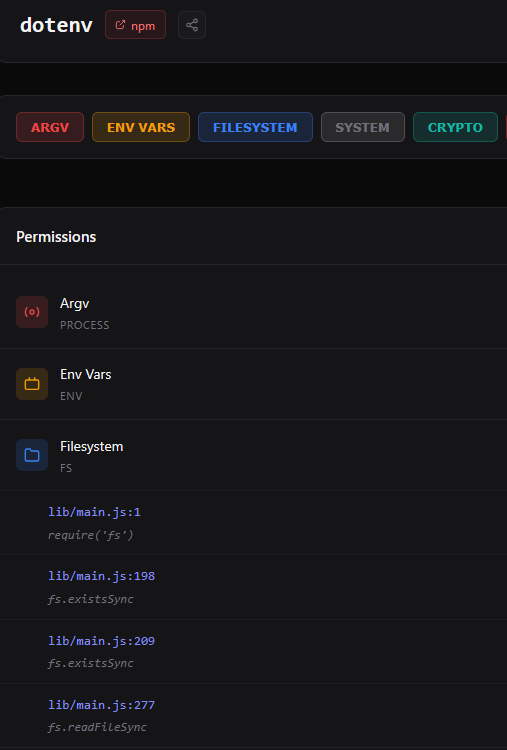
Fetch fingerprints or analyze tarballs to see capability traces, scripts, hashes, and dependency context.
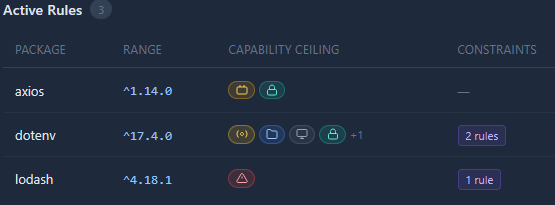
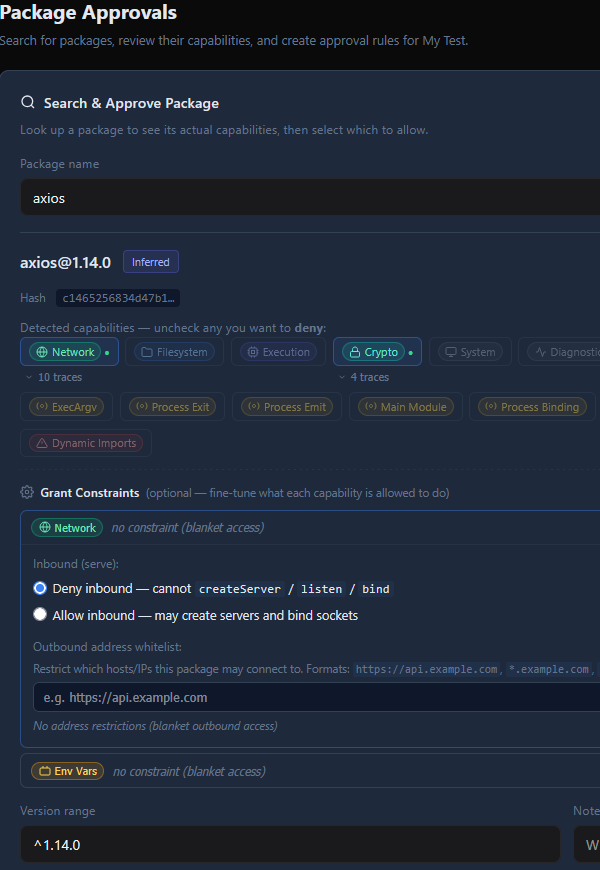
Create semver-scoped approval rules with a capability ceiling and grant constraints.
Target a specific trace, file hash, or function hash instead of broadening the whole package.
PermJS resolves org policy, verifies signatures locally, and enforces the result in dev workflows and CI.
Controls
keys.json, and sign approvals or overrides for client verification.
Policy as code
Security decisions usually live in docs, chat, or one security engineer's memory. PermPM turns those decisions into approvals, ceilings, constraints, and overrides attached to actual package versions and traces.
The policy endpoint resolves global overrides, org approvals, and org overrides in one response. PermJS can then merge that result into the lockfile and enforce it without trusting the registry blindly.
Trust chain
Fingerprint documents are signed by online keys chained to a root key, giving clients a verifiable source for package analysis.
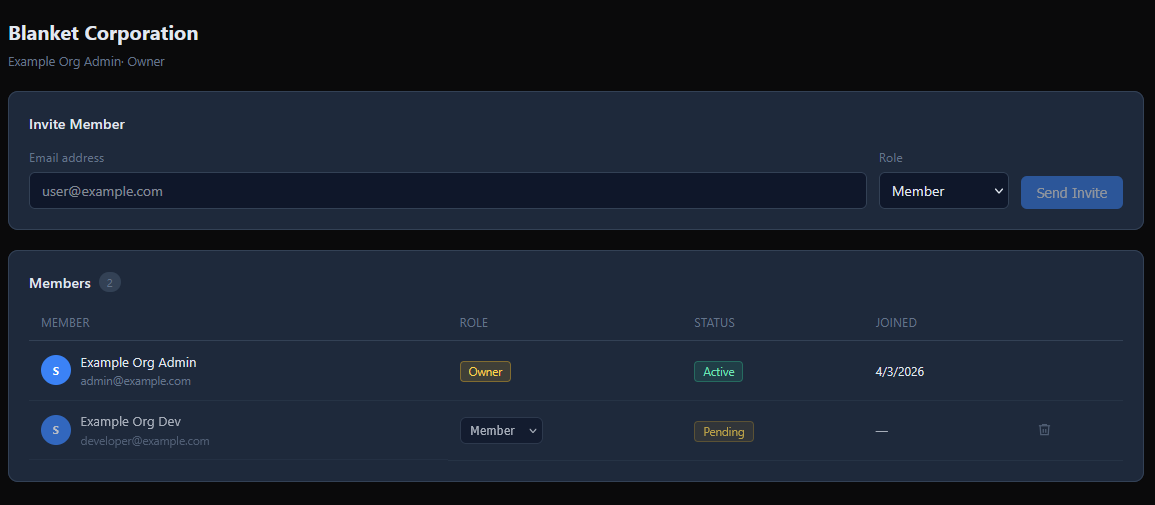
Organizations can publish their own keys.json, sign approvals and overrides, and rotate keys without depending on the global root.
The CLI verifies keys, fingerprints, and org-signed overrides locally before applying policy.
Follow us for updates
PermJS is still pre-release. Join the list for launch updates, new docs, and chances to test the workflow as the CLI and registry mature.